
Rules and ethics
Part of How to localise social media content for Welsh and English audiences
How to localise social media content for Welsh and English audiences
Welsh Language Standards, the Welsh Language Commissioner and native review: a practical five-step route through Welsh language marketing on social media.
What to take away
- If you are a listed public body in Wales, Welsh-language social posts sit inside a legal duty rather than a marketing preference.
- For everyone else, Welsh language marketing is a commercial choice, and it works best when the Welsh version is written rather than converted.
- Split the work into source, adaptation and sign-off, with a named owner at each stage.
- Report reach, comments and saves per language.
Know which Welsh language duty applies
Welsh Language Standards are set by the Welsh Ministers in regulations made under the Welsh Language (Wales) Measure 2011, and monitored and enforced by the Welsh Language Commissioner. They apply to the public bodies named in those regulations — the Welsh Government, county councils, national park authorities and NHS bodies in Wales among them — and to some private firms delivering public services under contract. If your brand falls outside that list, a Welsh language social media strategy is a commercial choice rather than a legal one.
What the Commissioner can do matters as much as the wording of the duty. Where a listed body has failed to meet a standard, the Commissioner can issue a compliance notice setting out what the body must do and by when, and requiring it to show how it has put things right. That is what turns the Welsh version of a social post from a courtesy into a requirement.
The equal-treatment principle is older than the Standards. The Welsh Language Act 1993 put Welsh and English on an equal basis in the provision of public services in Wales, and later duties built on that foundation.
The 2021 census, published by ONS, found 17.8% of people aged three and over in Wales could speak Welsh. ONS language data also breaks that down by local authority, which is more useful for campaign planning than one national figure.
A five-step localisation sequence
A repeatable sequence keeps Welsh posts out of the last-minute translation pile.
Five-step Welsh localisation sequence
- Freeze English source post
- Choose translation or transcreation
- Draft Welsh independently
- Run pre-release quality checklist
- Schedule separately and log approval
- Brief once, in the source language.Mark the offer, the deadline, the claim and any regulated statement that has to survive into Welsh.
- Choose the route before anyone writes.Transcreation for campaigns, humour and regulated claims; translation plus native review for service and factual posts; straight translation only for short standard messages such as opening hours.
- Write the Welsh version from the brief, not from the English sentences.Use official Welsh place-names, Welsh date forms and Welsh school-holiday patterns.
- Send it to a named Welsh-speaking reviewer.They check mutation, idiom and claim parity against the source, and their name and the approval date go on the record.
- Schedule, tag and measure.Give the Welsh version its own slot, tag the post by language in your scheduler, and read reach, comments and saves per language once it has run.
The pre-release quality checklist puts the same claim test on both language versions before either is scheduled.
Work through this list before either language version is scheduled:
- The Welsh version makes the same claim, with the same force, as the English one.
- Place names use their official Welsh forms, and dates follow the Welsh calendar.
- Mutation, verb-noun patterns and idiom read naturally to a first-language speaker.
- The offer, price, deadline and any regulated claim match across both versions.
- A named Welsh-speaking reviewer has approved the Welsh version, and the date is recorded.
- Both versions are tagged by language in the scheduling tool.
- The bilingual elementslogo, handle and hashtags — are correct and consistent.
Translation or transcreation: choose by risk
Not every post deserves the same treatment, so pick the route before anyone writes: transcreation, where the Welsh version is rewritten for effect; translation plus native review, where the meaning is fixed and a first-language speaker checks it; or straight translation for short standard messages such as opening hours. Match the route to the risk in the claim, not to the length of the text.
Route by claim risk
Translation
- Paid ad, regulated claim
- No
- Product launch
- No
- Community reply
- Yes plus review
- Event reminder
- Yes
Transcreation
- Paid ad, regulated claim
- Yes
- Product launch
- Yes
- Community reply
- No
- Event reminder
- No
Translation or transcreation
Route
- Paid ad with a regulated claim
- Transcreation
- Product launch announcement
- Transcreation
- Community reply
- Translation plus native review
- Event reminder
- Translation
Reason
- Paid ad with a regulated claim
- The claim must land with the same force in Welsh
- Product launch announcement
- Tone carries the news
- Community reply
- Speed matters, but errors are public
- Event reminder
- Fixed details, low interpretation
Sign-off
- Paid ad with a regulated claim
- Marketing lead plus compliance
- Product launch announcement
- Brand owner plus Welsh reviewer
- Community reply
- Community manager
- Event reminder
- Marketing assistant
Cultural detail that translation misses
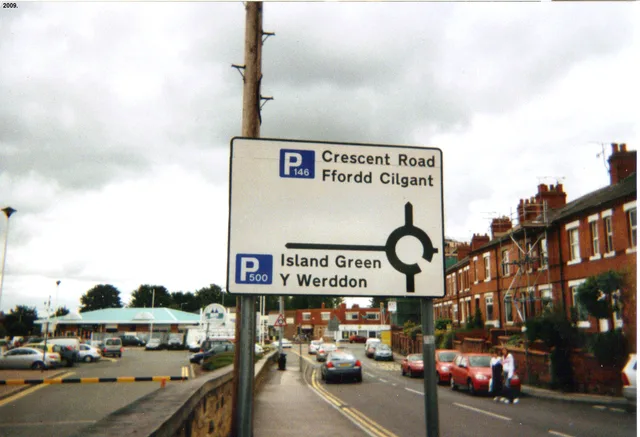
Welsh is not English with the nouns swapped. Mutation, verb-noun patterns and idiom make a literal rendering read as a translation, and audiences spot it fast.
Place names have official Welsh forms: Caerdydd for Cardiff, Abertawe for Swansea, Casnewydd for Newport and Wrecsam for Wrexham. The Welsh Language Commissioner publishes the list of standardised Welsh place-names, which is the reference to check before you write. Using the English form inside a Welsh sentence reads as careless, and so do English school-holiday dates pasted into a Welsh calendar.
Humour travels badly when transferred rather than rewritten. A joke that works on an English-language page may need a different setup in Welsh, or none at all.
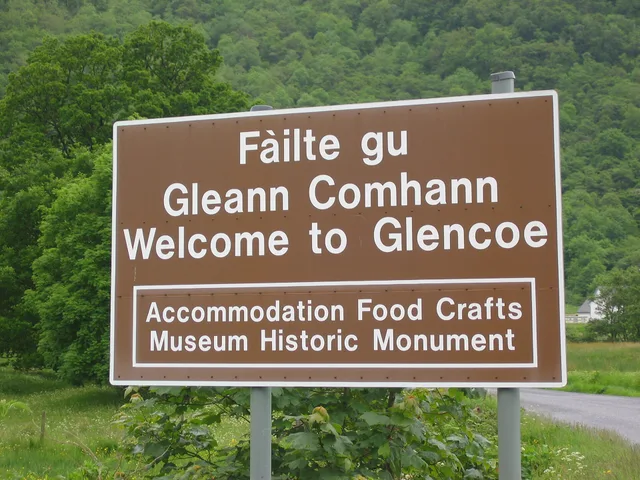
Welsh should not be decoration. A bilingual logo over an English-only post is the pattern audiences criticise most, because it signals compliance rather than respect.
Budgeting trips on the same point. A per-word rate set for French will not cover a Welsh rewrite, and pricing multilingual social media translation per word in the UK sets out which line items to separate.
Approval, evidence and measurement
Ad rules do not change with language. The CAP Code applies to a Welsh ad just as to an English one, and the ASA advertising codes define recognisable advertising.
Keep a short record for each Welsh post: source brief, reviewer name, approval date, scheduled time, and the evidence behind any claim.
Measurement needs a language split that the platforms do not give you by default. Tag each post by language in your scheduling or social media management tool — Sprout Social and similar tools let you report by tag — add a language marker to your link tracking, such as ?lang=cy, so GA4 groups the traffic, and pull reach, comments and saves per post from Instagram Insights or Meta Business Suite.
Judge Welsh posts on comment rate and repeat engagement, not impressions, which include people who scroll past both versions.
Common questions
Does my business have to post in Welsh?
Only if the Welsh Language Standards apply to your organisation. They are set by the Welsh Ministers in regulations and enforced by the Welsh Language Commissioner, who can issue a compliance notice where a body fails to meet one. Private brands outside that group can choose, and should not imply a duty they do not have.
Is machine translation good enough for social posts in Welsh?
No. Welsh morphology and mutation make raw machine output unreliable for anything published in your name, so a Welsh-speaking reviewer should see every post before it goes live.
Should we run one bilingual account or separate Welsh and English accounts?
One account with clear language switching suits most brands because it keeps the audience together. Separate accounts make sense when the two audiences need different offers or service hours.
How do we measure Welsh language marketing when most readers are bilingual?
Tag posts by language and compare comment and share rates within each group. Bilingual readers often reply in English, so read what replies say rather than the language they are written in.